
The Danger of Pension Socialism! National Pension Reform Is Urgent
-
Writer
Hyeok-cheol Kwon
-
 Easing the Pension Fund 5% Rule... Seriously Undermining the Autonomy of Private Enterprise Management and Corporate Governance
Introduce a competitive system... Private companies should also be allowed to handle the National Pension
The National Pension is once again emerging as the central issue in the economy.
It is nothing new that the powerful in this country have treated the National Pension Fund, piled as high as a mountain, as if it were their own slush fund and used it as a vehicle to transform the free market economy into a “de facto socialist” economy. The problem is that the political establishment and the government are now moving to solidify this shift toward a “de facto socialist” economy by using the National Pension as leverage, not through amendments to the law itself, but through revisions to an enforcement decree. Here, “de facto socialism” means that even if property is privately owned and companies are nominally private, if the state exercises effective control over them, it is no different from socialism. A historical example would be Nazi Germany, that is, “national socialism.”
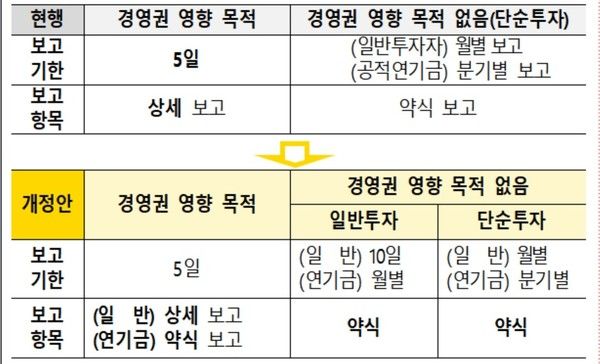
One of the measures at issue is the “plan to ease the pension fund 5% rule.” In this regard, the relevant Capital Markets Act clearly states that amendments to a company’s articles of incorporation are “matters of management control.” Nevertheless, through revision of the enforcement decree, which is subordinate legislation, the government intends to make an exception so that when a pension fund exercises shareholder rights, amendments to the articles of incorporation will not be treated as “matters of management control.” Needless to say, this ignores the principle that subordinate legislation must be bound by superior law. If this goes through, the National Pension will be fully able to push through anti-market systems such as cumulative voting and worker director representation by amending articles of incorporation. As a result, the autonomy of private enterprise management and corporate governance will be severely damaged, and the management of private companies will move decisively toward “de facto socialism,” in which it is determined by the intentions of the political establishment and the government that actually control the National Pension.
That these concerns are not groundless becomes even clearer when one looks at the National Pension’s “status and power.” As of July 2019, Korea’s National Pension was the world’s third-largest pension fund, managing more than 700 trillion won in reserves. Moreover, it held stakes of 5% or more in about 300 domestically listed companies, and in as many as 81 companies it owned more than 10%. This means the National Pension is the second- or third-largest shareholder in most of Korea’s major conglomerates. In addition, among the world’s five largest pension funds by asset size, Korea is the only country where the fund management committee belongs to a government ministry and the minister serves as its chair. In the end, this means that through the exercise of the National Pension’s shareholder rights, the political establishment and the government can wield enormous influence and control over private companies across Korea and over the economy as a whole.
Key contents of the proposed amendment to the enforcement decree of the Capital Markets Act related to the 5% rule. Table/Korea Employers Federation (KEF)
To prevent the tragedy of the National Pension leading us down the path of “de facto socialism,” reform of the National Pension system has become an unavoidable task. The core of reform is the introduction of competition. The current monopoly system, unified under the National Pension Service, must be broken up so that private companies can also handle National Pension accounts, thereby shifting to a competitive system. Likewise, in fund management, the current monopoly structure should be dismantled and replaced with a system in which several independent fund management divisions, and further, private asset managers, compete on the basis of returns and other performance measures.
Hyeokcheol Kwon, Vice President, Center for Free Enterprise (CFE)
Original title: 연금 사회주의 위험! 국민연금 개혁 시급하다
Author: Hyeok-cheol Kwon
Date: 2019-10-31
Source: https://www.cfe.org/bbs/bbsDetail.php?cid=press&pn=24&idx=22012